If your aircon chemical wash in Singapore is overdue, or a technician has just told you that you need one, this guide covers everything you should know before you book. We explain what a chemical wash actually involves, how to tell when your unit genuinely needs it, what it costs, and the warning signs that you are about to be overcharged.
We service thousands of units across Singapore every year, and the same questions come up repeatedly. This is our honest answer to all of them.
Key Takeaways
- A chemical wash uses cleaning solution to remove mould, grease, and mineral deposits that a regular service cannot reach.
- Most residential units benefit from a chemical wash once every 12 to 18 months, assuming quarterly general servicing is maintained in between.
- A 9,000 or 12,000 BTU blower unit costs $140 before GST. An 18,000 or 24,000 BTU blower unit costs $160 before GST. A compressor unit costs $100 before GST.
- If a technician recommends a chemical wash without running your unit or explaining what they found, that is a red flag worth taking seriously.
What is an aircon chemical wash?
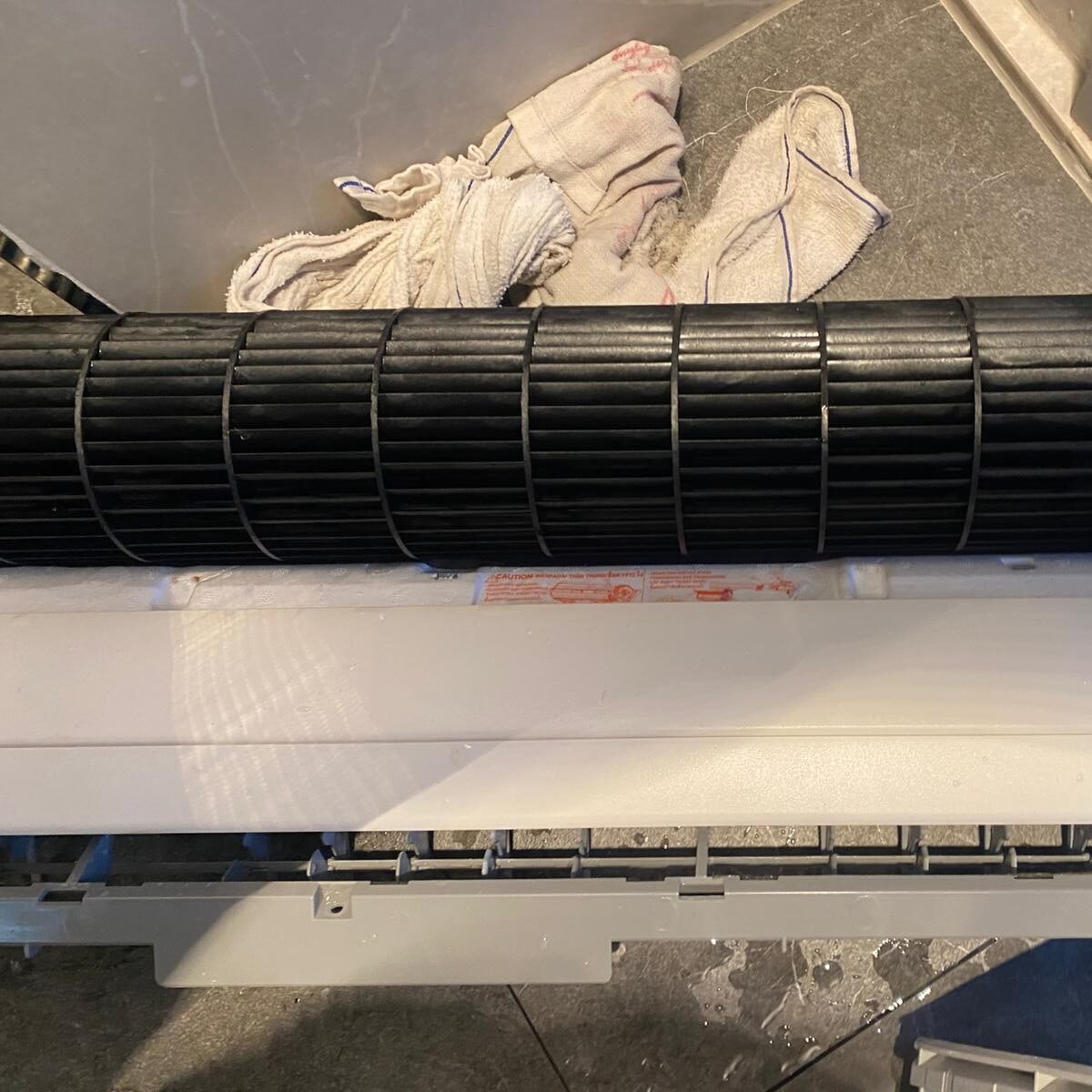
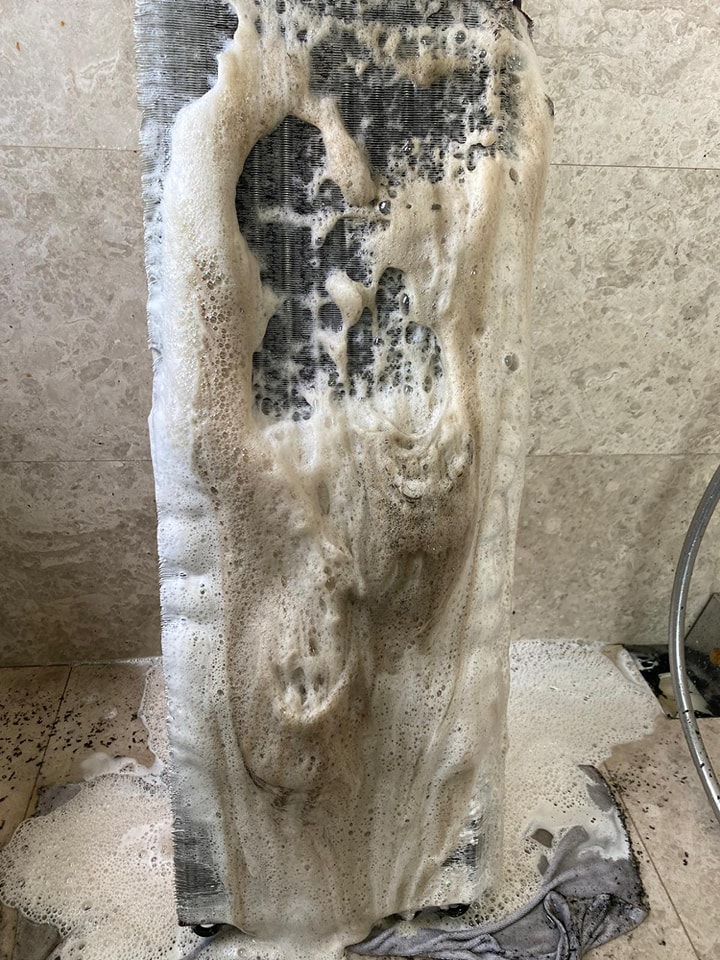
A chemical wash, also called chemical cleaning, is a deeper clean of your indoor aircon unit. It involves dismantling the unit and cleaning the evaporator coil, blower fan, drain pan, and casing using a chemical solution. That solution breaks down grease, mould, and mineral deposits that build up over time and cannot be removed with a regular service.
A regular service cleans the filter and wipes down the surfaces. A chemical wash goes further. The technician removes the front panel and internal components, applies the chemical solution, lets it work, rinses everything thoroughly, and reassembles the unit before testing it. A typical chemical wash takes around half an hour to one hour per indoor unit.
How do you know if your aircon needs a chemical wash?
The most common signs are weak cooling, a musty or stale smell when the unit is running, and water dripping from the indoor unit.
Here is a clearer breakdown by symptom.
1. Weak cooling despite the compressor running
The evaporator coil is likely fouled with dust and grime. When the coil is blocked, heat exchange becomes less efficient and the unit struggles to cool the room. A chemical wash clears the coil and restores performance.
2. Musty or stale smell
Mould grows on the blower fan and evaporator when moisture and dust combine inside the unit. A regular service will not remove established mould growth. Chemical cleaning does.
3. Water dripping from the indoor unit
This usually means the drain pan or drain line is blocked. A chemical wash clears both.
4. Visible grime or dark discolouration on the vanes
If you can see buildup when you look into the unit, the internal components are likely in worse condition than the exterior suggests.
5. Higher electricity bills with no change in usage
A dirty evaporator coil forces the compressor to work harder. If your bills have crept up and your usage habits have not changed, the unit may be working harder than it should.
6. Last serviced more than 12 months ago
A unit that has gone without any service for over a year is almost always due for a chemical wash regardless of symptoms.
Chemical Wash vs Regular Servicing: which one do you actually need?
This is the most common question we get, and the honest answer depends on the condition of your unit.
A regular service is sufficient when the unit is cooling normally, filters are dirty from routine use, and it has been around three months since the last service. If nothing has changed and the unit is performing as expected, a regular service is the right call.
A chemical wash is the right service when cooling has noticeably dropped, there is a persistent smell that did not clear after a regular service, the drain pan is visibly mouldy, or the unit has not been properly serviced in over a year.
One thing worth knowing: you do not need to book a chemical wash every quarter. For most residential units, a quarterly general service between chemical washes is adequate.
Chemical Wash vs Chemical Overhaul: what is the difference?
A chemical wash and a chemical overhaul are not the same service, and the distinction matters when a technician is recommending one over the other.
In a chemical wash, the unit is dismantled and cleaned in place. The blower wheel stays inside the unit and is cleaned with the chemical solution. This is appropriate for most maintenance situations.
In a chemical overhaul, the blower wheel is fully removed and soaked separately. This takes longer and costs more, but it is the right service when the blower wheel is caked with hardened grime that cannot be properly cleaned without full removal.
You likely need a chemical overhaul rather than a chemical wash when the unit has never been chemically cleaned in three or more years, when water continues to drip from the unit after a chemical wash has already been done, or when the blower is visibly packed with compacted grime that the technician can show you.
Most units needing their first proper chemical clean need a wash, not an overhaul. If a technician recommends an overhaul on a unit that has been regularly serviced, ask them to show you specifically what they found.
How much does an aircon chemical wash cost in Singapore?
Prices for a chemical wash in Singapore vary based on the size of your indoor unit, measured in British Thermal Units (BTU), and whether the service covers the blower units only or includes the outdoor compressor.
Here are our prices before GST.
| Unit | Price (before GST) |
|---|---|
| Indoor blower unit, 9,000 or 12,000 BTU | $140 per unit |
| Indoor blower unit, 18,000 or 24,000 BTU | $160 per unit |
| Outdoor compressor unit | $100 per unit |
Most Singapore homes run on a multi-split system. A System 3 setup with three 9,000 to 12,000 BTU indoor units and one compressor comes to $520.
Our standard inspection fee of $50 is waived when you proceed with a service.
What affects the price of an aircon chemical wash?
The main factors are unit size, number of indoor units, and the condition of the unit.
Larger blower units take more time and use more chemical solution, which is why the price differs between 9/12K and 18/24K units. A System 4 with four indoor units will cost more than a System 2, simply because there are more units to clean.
The condition of the unit also matters. A unit that has been neglected for several years may need a chemical overhaul instead of a chemical wash, which is a different and more involved service. We will always assess the unit and explain what we find before making recommendations.
What should not affect the price is the brand of your unit. A chemical wash for a Daikin, Samsung, Panasonic, or any other brand’s unit is priced the same way, based on BTU size.
What are the signs of an aircon chemical wash scam?
After years of hearing from customers’ past experiences, here are some tactics to watch for.
1. A recommendation without any assessment
A technician who arrives for a standard service and immediately tells you that you need a chemical wash, overhaul, or gas top-up without first running and inspecting the unit is a warning sign. A legitimate diagnosis involves actually checking the unit and explaining the issues found.
2. “Your compressor is about to fail” with nothing to back it up
Compressor problems have specific signs: the unit not cooling despite running, tripping the circuit breaker, or making unusual noises. If a technician cannot explain what they observed that led to this conclusion, be cautious.
3. No quote before work begins
You should know exactly what you are paying for before anything is dismantled. Ask for a broken down quote before the job starts.
4. Very low advertised prices that expand on arrival
A $50 chemical wash that becomes $300 after extra parts or additional cleaning is a pattern we hear about regularly. If the advertised price seems unusually low, find out exactly what it covers before commencing.
The simplest protection is to ask for a written scope and price before work starts, and to use a company with published prices and a verifiable service history. If a technician pressures you to approve work immediately, that pressure itself is a warning sign.
What happens during a professional aircon chemical wash?
Here is what you should expect when our team arrives for a chemical wash.
1. Before work begins
Before work begins, the technician inspects the unit, runs it briefly to assess performance, and confirms the scope of work with you.
2. Preparation
Floor mats are laid and plastic sheeting is placed over nearby furniture before anything is opened.
3. Disassembly
The front panel, filters, and casing are removed carefully.
4. Cleaning
The evaporator coil, blower fan, and drain pan are cleaned using chemical solution, which is left to work before rinsing.
5. Reassembly and testing
All components are reassembled, the unit is switched on, and the technician confirms cooling performance and checks that the drainage is clear.
6. Cleanup
The work area is cleaned, surfaces are wiped down, and all waste is removed from your home or office.
If anything looks worse than expected during the service, such as a blower wheel that needs a full soak, the technician will stop and explain before proceeding with anything additional.
How often should you get an aircon chemical wash in Singapore?
For most residential inverter units in Singapore, a chemical wash once every 12 to 18 months is appropriate. That is assuming quarterly general servicing is happening in between.
Singapore’s climate pushes aircon units harder than in most other countries. High humidity, near-constant operation, and urban dust all mean that internal components accumulate grime faster than manufacturer schedules designed for temperate climates would suggest.
Here are a few brand-specific notes worth knowing:
Daikin units perform best on a quarterly general service cycle. A chemical wash makes sense when filter cleaning no longer fully restores cooling output, which in Singapore is typically around once a year for regularly-serviced units.
Samsung WindFree and multi-split units have fine-mesh filters on some models that trap finer particles. Units in high-use rooms may benefit from a chemical wash every 12 months rather than 18.
Panasonic units with nanoe technology have more complex filter systems. If the nanoe function is running but odours persist after a regular service, a chemical wash is usually the right next step.
If you are unsure, a quarterly service visit is the right time to ask. Our technicians check the coil and drain pan condition on every visit.
How do you maintain your aircon after a chemical wash?
A chemical wash gives your unit a clean slate. How long that lasts depends mostly on what happens between washes.
1. Clean your filters
Clean your filters every four to six weeks, or more often if the unit runs heavily or the room has pets. A clogged filter forces the unit to work harder and accelerates buildup on the coil.
2. Right temperature setting
Avoid setting the thermostat below 23 degrees Celsius consistently. Running the unit very cold puts unnecessary strain on the compressor and can cause the coil to frost over faster.
3. Consistent maintenance
Book a general service every three months. Consistent maintenance between chemical washes is what keeps units performing well and extends the time before another deep clean is needed.
Our quarterly servicing packages are priced to make that routine straightforward. Annual package for System 2 is $240, $276 for System 3 and $368 for System 4 (before GST). Enjoy cost savings compared to booking individual visits.
Why choose Air Connection for your aircon chemical wash?
We have been servicing aircon units across Singapore since 2011. Our team of 60 technicians has cleaned and serviced over 650,000 units, and we are an authorised Samsung Service Partner. We hold bizSAFE Level 3 certification and are BCA registered.
Our pricing is published with no hidden charges. You will receive a clear scope of work before commencing, and if the condition of the unit changes what is needed, we will explain and seek your agreement before proceeding with anything additional.
We operate Monday to Saturday from 09:00 to 23:00. To book a chemical wash or get a quote, contact us directly.
Frequently Asked Questions (FAQ)
1. Can I use my aircon immediately after a chemical wash?
Yes. Once the technician has reassembled the unit and run a test to confirm cooling performance and drainage, the unit is ready to use. This happens within the same visit.
2. Will a chemical wash fix my aircon if it is not cold?
It depends on the cause. If the problem is a dirty evaporator coil reducing heat exchange, a chemical wash will restore cooling performance.
If the cause is low refrigerant gas or a compressor fault, a chemical wash will not fix it. Those are separate problems that require a gas top-up or a repair. A technician should diagnose the root cause before recommending a chemical wash specifically.
3. Is a chemical wash safe for inverter aircon units?
Yes. The process is the same for inverter and non-inverter systems, and the chemical solution used is safe for coil fins and internal components when applied correctly by a trained technician.
4. What does an aircon chemical wash include?
A complete chemical wash covers dismantling the indoor unit, chemical cleaning of the evaporator coil, blower fan, and drain pan, rinsing, reassembly, a test run to confirm performance, and full cleanup of the work area.